A physician who never stopped seeking — medicine, psychology, the human sciences — and the Qur'an that holds them together.

Worked on one heart first. Proven. Then given to the ummah, and published for the same cause — the books, the Academy, the apps, and a talk every Friday. This is the journey, in his own words.

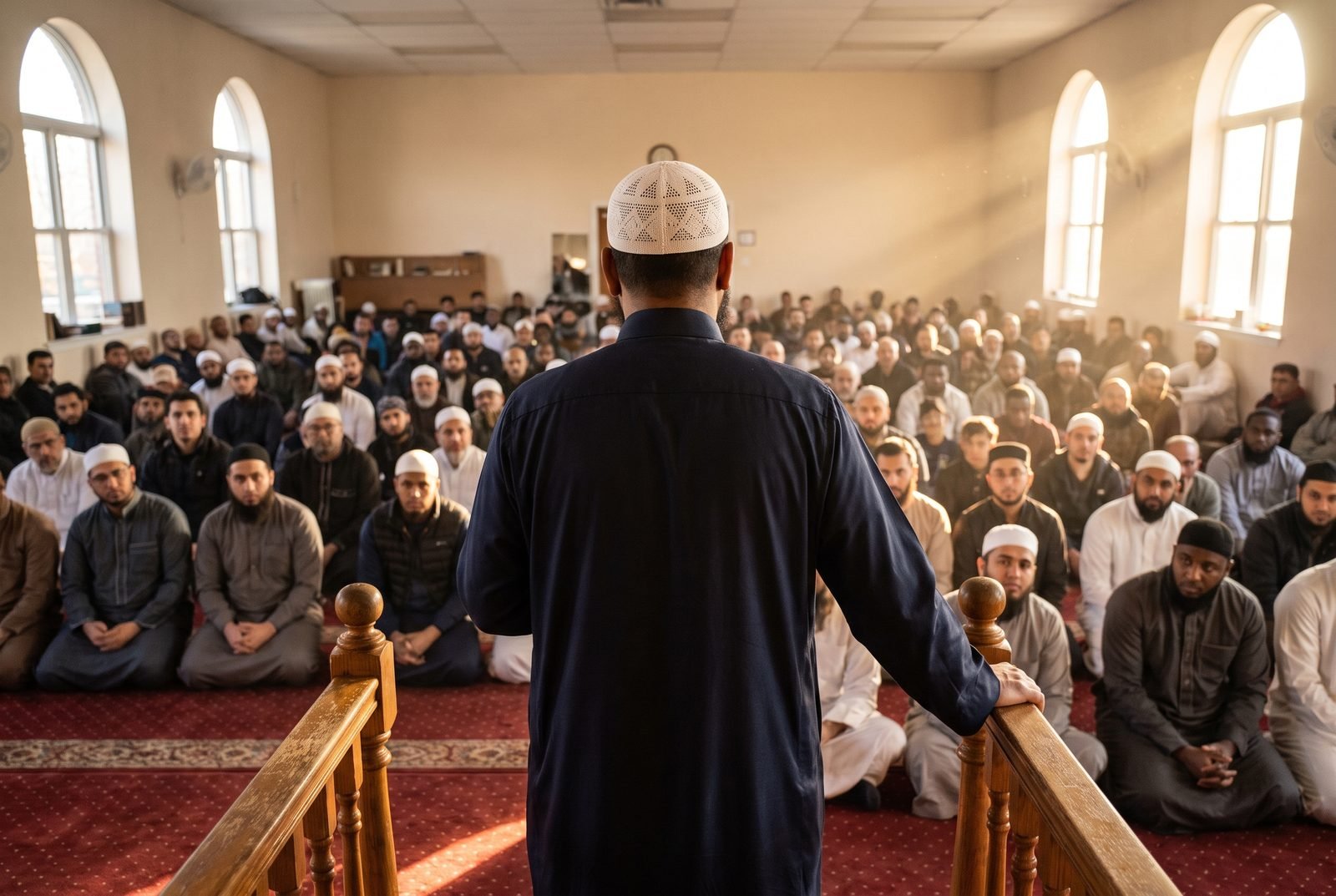
A speaker seen from behind at a minbar, a sunlit congregation before him
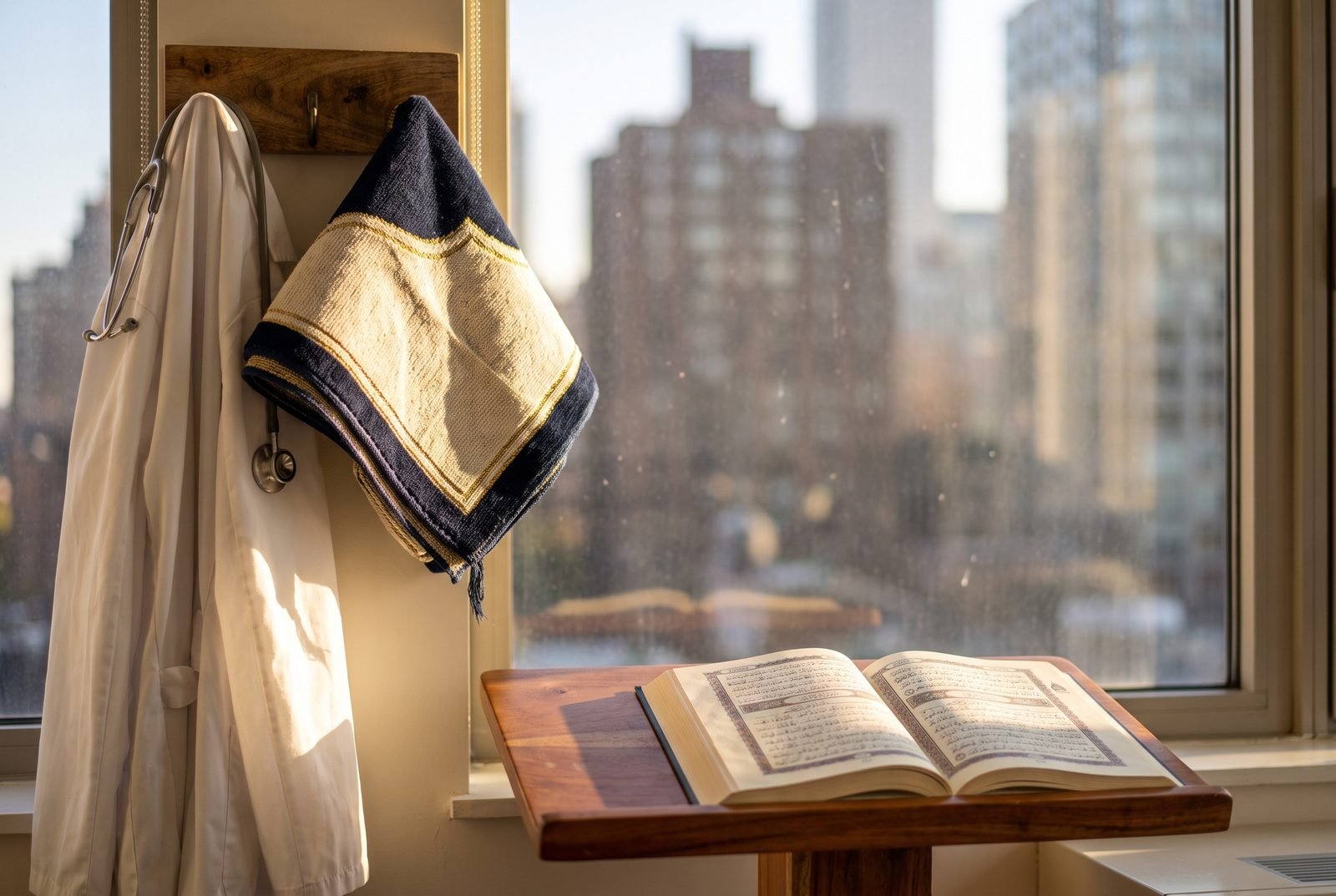
A white coat and stethoscope hung beside a prayer mat and an open muṣḥaf

The record, briefly.

  • I gave my first khutbah at twelve, in Egypt, and have taught and spoken in masājid ever since — for the last eight years in New York.
  • I trained at Al-Azhar University in Cairo (2011–2019): a Bachelor of Medicine and Surgery (M.B., Ch.B.), graded Excellent, with a rotating internship across eight departments — and a Master's in Qur'an and Islamic Studies.
  • I hold an ijāzah in the Qur'an, Ḥafṣ ʿan ʿĀṣim, from multiple mashāyikh, with connected chains of transmission.
  • I served as resident scholar at the Islamic Center of Mid-Westchester (2018–2023) and at MAS Queens Center (2023–2025), where I still give the Friday khutbah.
  • Since 2017 I've been Youth Director at the Hudson Valley Islamic Community Center — Qur'an, tajwīd, family nights, and a karate class.
  • I founded I Live Islam — the Academy, the Storybook and the Muṣḥaf — and Speak to Lead, and I build the software myself with my brother.
  • I'm writing seven books: The Heart You Bring, One Person One Master, a full tafsir of the Qur'an, my own English rendering of the Qur'an, Look Again, and a five-book audit of science-and-Qur'an claims.
  • In New York I led the digital-pathology rollout at Mount Sinai, trained in trauma surgery and the ICU at St. Barnabas in the Bronx, and co-author clinical research with a Harvard-affiliated group — and I'm a black belt and three-time Egyptian national karate champion.
My story

I worked it on myself first. Then it became a responsibility.

I am a medical doctor, and that is where this story has to begin, because everything on this site comes from one decision: to take all of my medical knowledge, my pursuit of psychology and the human sciences, and an experience I never stopped seeking — and put it all in the service of the ummah. But I did not start with the ummah. I started with myself. The Qur'an as a daily practice, the science as a discipline, the psychology as a mirror: I tested every bit of it on my own heart before I said a word of it to anyone else. It proved to help me — through medical school, through the hospitals, through years of standing in front of rooms full of hearts. And once something has proven to help you, keeping it to yourself stops being modesty. It became a responsibility: to use it to serve my ummah, and to publish it for the same cause.

Every vision is rooted in experience, and mine is rooted in Al-Azhar. As a boy I began my day in the kuttāb. I still remember those blessed hours after Fajr — quiet, sacred, filled with recitation — sitting with my shaykh until it was time to head straight to school. In the summer, from the moment I woke up until Ẓuhr, my time belonged to the Qur'an, to my teacher, to my dīn. Those hours made Islam not something I practised but something woven into me. I never felt alone, because the Qur'an was with me.

Later I noticed something remarkable. Nearly all of my classmates who shared that rhythm excelled — many scoring over 99% in Al-Azhar high school while carrying Arabic and Islamic studies on top of the state curriculum. It was never a burden. It sharpened us. And when I entered medical school the fruit was clearer still: the best among us — academically, intellectually, spiritually — were the ones shaped by that same Qur'anic foundation. Early, immersive Islamic education does not hold children back. It lifts them higher.

I was twelve the first time I stood on a minbar, and I discovered something that has never left me: a khutbah is not a lecture. It is a room full of hearts, and you are responsible for what they leave with. At Al-Azhar I did two things at once that people kept calling opposites — medicine, with its anatomy and long clinical nights, and the Qur'an, its sciences, its tafsir, its transmission, until I held an ijāzah with a chain that reaches back to the Prophet ﷺ. I never found the contradiction I was warned about. I found one responsibility with two rooms: the ward, where the body is a trust, and the minbar, where the heart is.

Alongside my medical classes I started teaching American students Qur'an and Islamic studies online. At first it was simply a way to support myself and ease the burden on my family. Very quickly it became something much deeper: each session was not about letters and rules, it was about guiding a future. And I saw another truth — brilliant graduates of Islamic universities in Egypt carrying immense knowledge and living with little opportunity, for whom one chance could change everything. Teaching was never a job to me. It is a noble cause. That is where the idea of an academy was planted: to give back to those teachers, to open doors, and to build something none of us could build alone.

Teaching students in the United States taught me that their needs were different. Looking at their difficulties from the outside made them easier to understand — like a case in psychiatry: you step back, you locate the source, you diagnose precisely. Every student became a case that asked for sensitivity, adaptation and care. Teaching is not repeating what you know. It takes real training, deep roots and psychological insight before you can say, “I am ready to teach.” Islamic education today has to combine authenticity with psychological wisdom — without that balance we do not reach hearts and minds. So I kept seeking: psychology, the human sciences, the clinic. Not to decorate the tradition, but to serve it.

In 2017 I moved to New York. The hospitals came first — Mount Sinai's pathology floor, then the trauma bay and the ICU at St. Barnabas in the Bronx — and, in the same years, five as resident scholar at the Islamic Center of Mid-Westchester and two at MAS Queens Center: daily prayers, tarāwīḥ with khatm, nikāḥ and janāzah, counselling at kitchen tables, and a Friday khutbah every week in English. I watched a generation sit through lectures with full minds and untouched hearts, and I watched their parents search for a teacher who would actually listen to their child read.

So I started building. First a program — Speak to Lead — because a young Muslim who can stand up and speak the sīrah clearly is already a leader. Then the software: a companion that tracks a whole Muslim life, a storybook that turns every āyah into a scene a child can step inside, a muṣḥaf that reads aloud and grades your recitation, and the Academy, where a real teacher meets one learner at a time. And the books, because some things only a book can do: The Heart You Bring names the diseases of the heart and shows the door out; the tafsir explains every sūrah in a voice you can read from a minbar and alone at night; Look Again reads the Qur'an on the human interior; Reading El-Naggar audits a lifetime of science-and-Qur'an claims.

All of it comes from one intention, renewed before anything else: to serve Allah by serving His Book, His dīn and the next generation. This work is a trust before it is a business, a responsibility before it is a project — and every student, every family, every community I work with is an amānah. What was learned for my own heart is published for the ummah's, for the same cause. Success in this life and the next is one curriculum, not two, and the next generation deserves to be raised with both.

From Him, to Him, and the journey is not long.
Nabil Imran · The Heart You Bring · Part five, The Journey
Two callings, one amānah

I never chose between the ward and the minbar. Both are the same responsibility.

This ummah is my responsibility before it is my audience. A physician who carries the Qur'an, and a scholar who understands the body and the mind — that is not two careers. It is one trust, carried in two rooms.

A white coat and stethoscope hung beside a prayer mat and an open muṣḥaf
Medicine · the body is a trust

The physician's hand

I studied medicine because the ummah needs people who can stand at a bedside and at a minbar with the same seriousness. Medicine gave me the discipline I now bring to every class: examine, locate the source, treat precisely, follow up. The body is an amānah too.

  • Al-Azhar Faculty of Medicine, M.B., Ch.B., Excellent (2011–2018); rotating internship at Al-Azhar University Hospitals in internal medicine, surgery, pediatrics, Ob/Gyn, neurology, rheumatology, plastic surgery and neurosurgery.
  • Mount Sinai Hospital, New York (2019–2021): led the implementation of the Pathology Department's digital scanning system, and coordinated clinical-research studies from protocol to audit.
  • St. Barnabas Hospital, Bronx (2022–2023): trauma surgery and ICU — evaluation, perioperative care, and trial work on call.
  • Research with a Beth Israel Deaconess Medical Center group: a PROSPERO-registered network meta-analysis in HFpEF, and adrenal-vein-sampling work submitted to Hypertension (2026, in review).
A speaker seen from behind at a minbar, a sunlit congregation before him
The minbar · a room full of hearts

The voice on the minbar

I have stood on a minbar since I was twelve, and I have never stopped feeling the weight of it: every Friday a room of hearts leaves with what you gave them. The community work follows from that — a fundraiser, a janāzah, a new Muslim's first questions, a teenager's first talk. It is the same trust as the ward.

  • Resident scholar at the Islamic Center of Mid-Westchester (2018–2023) and MAS Queens Center (2023–2025), where I still give the Friday khutbah; Youth Director at the Hudson Valley Islamic Community Center since 2017.
  • Ijāzah in the Qur'an, Ḥafṣ ʿan ʿĀṣim, with connected chains; a Master's in Qur'an and Islamic Studies from Al-Azhar.
  • Khutbahs and fundraising campaigns across America for Al-Furqan Foundation, Pure Hand and the Muslim American Society; involved with Africa Relief & Community Development in 30+ countries.
  • Counselling, nikāḥ and janāzah, interfaith work, new-Muslim support — and Speak to Lead, so the next generation can stand up and speak for itself.
What we believe about Islamic education

Families have carried a quiet struggle for years. Here is where it comes from.

Weekend schools

Checkpoints, not foundations

They are valuable, and they cannot carry a generation alone. Two or three hours a week give parents comfort while the deeper needs of our youth stay unmet.

Full-time Islamic schools

Heroic, and exhausted

Stretched by state requirements, they are left a sliver of the day for Qur'an and Arabic — and then struggle to find teachers who can explain the dīn without a child feeling embarrassed or misunderstood.

Online

Everything else already moved

Math, medicine, music — all thriving in digital classrooms. Islamic education stayed fragmented, inconsistent and underdeveloped. It must stand beside our institutions, not behind them.

The answer is not to replace what exists. It is to complete it.

Schools give structure, masājid give community, families give nurture. The missing piece is authentic teachers, modern pedagogy, psychological insight, and one syllabus delivered in person and online as a single system — so that Islamic education is not fragmented but whole, and no student is left behind.

Complete, not compete.

AuthenticityClarityCompassion

Faithful to the Qur'an, the Sunnah and the scholars · lessons a child, a teenager or an adult can follow · a teacher who believes in the learner in front of them.

What every class is held to
  • Teachers are chosen, not listed. Screening, knowledge tests, an interview and a demo lesson before anyone teaches — then training in the culture and psychology of the learners in front of them.
  • Learning difficulties get smaller steps. Dyslexia, ADHD, weak memory: chunked lessons, multi-sensory drills, strategies that make learning stick.
  • Behaviour gets patience and structure. Focus, disruption, social anxiety: calm classroom management, structured interaction, gentle reinforcement.
  • Language gets a bridge. Bilingual scaffolding, visuals and storytelling, and permission to make mistakes without fear.
  • Emotional needs get noticed early. Encouragement first — and, when a family needs more, a referral to real professional support.
  • Parents stay in the room. Safeguarding is non-negotiable, and a parent who can see the progress is part of the classroom.
Timeline
2004

First khutbah, at twelve

Egypt. Teaching and speaking in masājid across the country from then on.

2011 – 2019

Al-Azhar University, Cairo

M.B., Ch.B. and Master's in Qur'an and Islamic Studies; Qur'an ijāzah, Ḥafṣ ʿan ʿĀṣim.

Medical school

First American students, online

Teaching Qur'an and Islamic studies to U.S. families from Cairo — the first look at how different their needs were, and the seed of an academy.

2017 – now

Youth Director, Hudson Valley ICC

Qur'an, tajwīd and Islamic studies; monthly sermons; family nights; karate.

2018 – 2019

Rotating internship, Al-Azhar University Hospitals

Internal medicine, surgery, pediatrics, Ob/Gyn, neurology, rheumatology, plastic surgery, neurosurgery.

2018 – 2023

Resident Scholar, Islamic Center of Mid-Westchester

Daily prayers, tarāwīḥ with khatm, interfaith work, new-Muslim support, counselling.

2019 – 2021

Mount Sinai Hospital, New York

Pathology operations: led the digital scanning rollout; clinical-research coordination and regulatory work.

2022 – 2023

St. Barnabas Hospital, Bronx

Trauma surgery and ICU observership; trial work on call.

2023 – 2025

Resident Scholar, MAS Queens Center

Full-time; since June 2025 the weekly Friday khutbah and monthly lectures.

2024

Speak to Lead takes the stage

Weekly cohorts in Astoria and Mohegan Lake.

2025

I Love Islam and We Love Islam

The six-pillar companion app on iOS and the web, on one shared backend.

2026

The Academy, and the books

I Live Islam v2 ships the Academy, the Storybook and the Muṣḥaf; The Heart You Bring reaches its third draft; the tafsir enters final review.

Why both

Science in service of the tradition

The scholars mapped the heart with a precision the cardiologists are only now confirming; the Qur'an's account of the human interior was waiting for psychology to catch up. I read one with the other so that a young Muslim never has to choose.

Community

Campaigns

Khutbahs and fundraising campaigns across America for Al-Furqan Foundation, Pure Hand and the Muslim American Society; involved with Africa Relief & Community Development in 30+ countries.

Off the clock

Karate, marathons, snow

Black belt and three-time Egyptian national champion (2008–2010); Al-Azhar marathon winner; skis, cycles, runs. Fluent in Arabic and English.

Published for the same cause

Where it goes

Books in English and Arabic, a khutbah every Friday, a letter every Thursday, an academy where a teacher listens, and apps a family can open tonight — all of it what I learned for my own heart, given back to the ummah's.

Now

In the works

Final review of the tafsir, the Arabic edition of The Heart You Bring, the next Speak to Lead season, and the Academy's family plans.

Follow along in the letter